
Now viewing:
Find your fit
Early detection saves money — and lives
One of the most effective ways to reduce financial stress doesn’t involve complicated investing or constant number-crunching. It’s about getting ahead of potential health issues. Preventive care and early detection offer something that brings real peace of mind: fewer surprises and more control.
You can’t eliminate every risk. But by focusing on early detection, using the tools available to you and planning ahead, you replace uncertainty with preparation — and protect both your well-being and your financial future. Sandia helps make this convenient by offering preventive care for employees at our on-site clinics in New Mexico and California.
More smart money moves
Lock it down and worry less
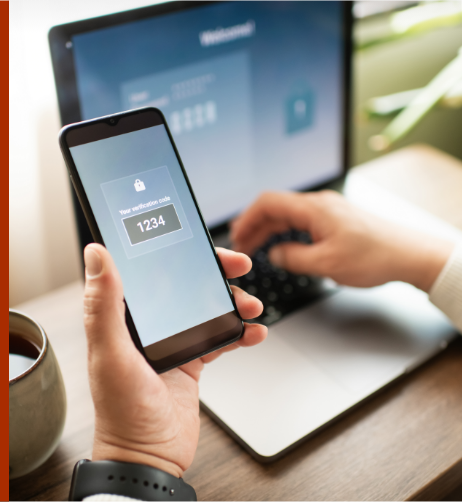 You’re not imagining things — cybercrime is real, and scammers really do look for everyday people to target. But here’s the reassuring part: Most cybercrime succeeds because of a few common gaps, and those gaps are very fixable. You don’t need to become a tech expert. You just need to lock down the basics. Focus on these three steps and you can rest a lot easier.
1. Fortify your accounts (this does most of the heavy lifting)
Think of your accounts as the front door to your financial life. Strong, unique logins make that door much harder to break through.
Create different usernames and passwords for your financial, email, phone and social media accounts — and avoid using your email address as a login. Skip weak passwords and use passphrases that are easy for you to remember but hard for others to guess.
Turn on two-factor authentication wherever it’s available. Biometrics like fingerprints, facial recognition and voice authentication add powerful protection with very little effort. Also, keep your email address and phone number up to date so you can be contacted immediately if something looks suspicious. And when in doubt, don’t click! Phishing emails and texts are still one of the biggest ways scammers get in.
2. Secure the devices you use every day
Your phone, laptop and home Wi-Fi matter more than you think. Use antivirus software and a firewall, keep your devices updated, and avoid doing sensitive tasks on public Wi-Fi.
Secure your mobile account with extra authentication so your number can’t be transferred without your approval. Update smart devices like TVs and routers, change default passwords, and use built-in features like screen locks and “find my phone” apps. These small steps close doors scammers love to sneak through.
3. Monitor, back up and protect what’s yours
Peace of mind comes from knowing you’ll spot problems early. Regularly review account activity and alerts, and consider freezing your credit to prevent fraud before it starts.
Back up important data to secure cloud storage, shop only on encrypted websites, avoid using debit cards online, and protect your U.S. mail by signing up for USPS Informed Delivery.
Worrying less doesn’t mean ignoring risk — it means putting protections in place. Once you do, you can stop checking over your shoulder and feel confident your assets are well protected. Looking for more tips and resources for staying cyber-safe? Visit Fidelity.
Consider Roth contributions for your savings strategy
 If you’re still decades away from retirement or you don’t plan to withdraw your money for many years, consider the advantages of tax-free earnings and compounding that come with making Roth contributions to your 401(k).
Roth contributions can be a tax strategy for securing your long-term financial future. Unlike traditional pretax contributions, Roth contributions are made with income you’ve already paid taxes on. These contributions and any earnings grow tax-free, and you won’t pay taxes on qualified withdrawals. In short, Roth contributions can reduce your tax liability in retirement.
Although Roth IRA contributions are capped at lower levels and limited by income, the Sandia 401(k) allows contributions up to the higher IRS limits with no earnings restrictions.
Remember, the 401(k) plan is flexible. You can make both Roth and pretax contributions to your 401(k) up to the IRS limits and still receive your match from Sandia.
To model the impact Roth contributions can have on your savings, log in to Fidelity and visit the contribution page.
Prioritize your finances
 We’re all feeling a bit of uncertainty these days with the unpredictable changes in the economy and its impact on our wallets.
The simple act of taking the time to set small goals that address one financial priority at a time can significantly reduce stress, increase your confidence, and bring you closer to achieving financial security — something that everyone aspires to.
Afraid of what you may learn? Don’t let that stop you. Shift your mindset to what you can control and start small.
It could be something as simple as cancelling subscriptions you no longer use (or need) or organizing your bills and getting rid of outdated statements. Or maybe it’s something a little bigger, like tackling credit card debt and paying off balances.
Regardless, it starts with committing your time to secure your financial future. To get started, block some time on your calendar for a personal meeting. This is time you set aside to focus and take stock of your financial picture.
Need help? Log in to your Fidelity account to sign up for a complimentary one-on-one appointment.